



The public reopening of the Temple of Vaccinia will follow a celebration evening on Thursday 14 May 2026, exactly 230 years since Jenner successfully vaccinated eight-year-old James Phipps in 1796, the moment the story of vaccination began.
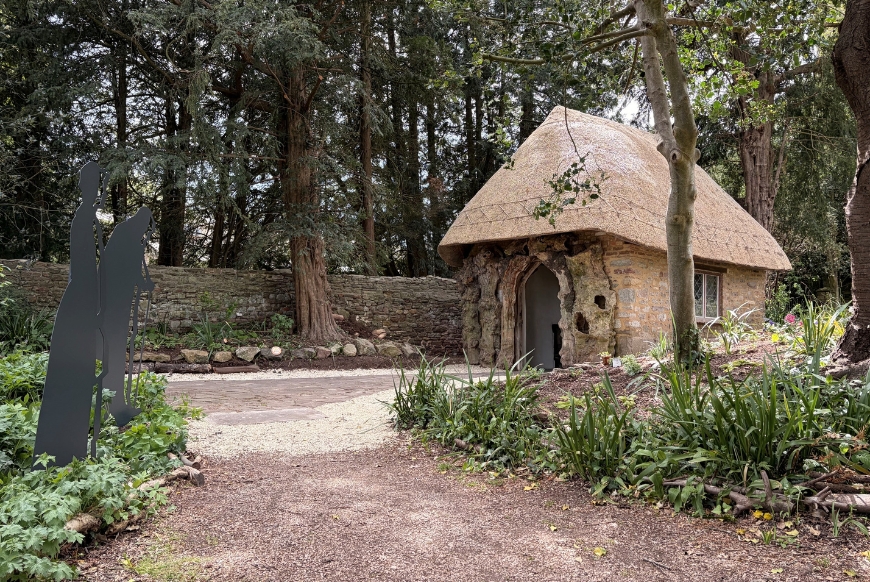
This modest garden building, first created as an ornamental folly and later used by Jenner to vaccinate local people free of charge, has undergone major restoration and access improvements. Community celebrations will also be held during the May half-term holiday.
The restoration is the first stage of Re-Jenner-ation, Dr Jenner’s House’s major plans to restore the museum and site, improve interpretation, education and access. The work has been made possible thanks to National Lottery players and a grant of £221,508 from The National Lottery Heritage Fund. This grant has helped restore the Temple of Vaccinia and develop the initial plans for the renovation of Dr Jenner’s House and Garden.
Originally built for Jenner by his friend the Reverend Robert Ferryman as a rustic retreat from his busy working life, the Temple soon became a place of work as well as reflection. After his breakthrough in preventing smallpox through vaccination, Jenner offered vaccination to local people, free of charge, at a time when medical care was beyond the reach of many. This repurposing of the hut led Jenner to playfully rename it The Temple of Vaccinia.
From this quiet corner of Berkeley, vaccination spread across Britain and around the world. Jenner did not patent his discovery but worked tirelessly to share it widely, referring to himself as the “vaccine clerk to the world”. In time, vaccination contributed to the eradication of smallpox in 1980 - the first, and currently only, human disease to be eliminated globally.
James Rodliff, Museum Director at Dr Jenner’s House, said:
“The Temple of Vaccinia is an unassuming building with a story of global significance: what happened here changed the course of public health. Restoring it means visitors can stand in the place where Jenner chose to offer vaccination freely to his community and understand how an idea from Berkeley helped protect people around the world.
“We are enormously grateful to The National Lottery Heritage Fund, and to National Lottery players, whose support has made this work possible. The restored Temple is not only a precious piece of heritage, it is a place where we can talk about science, public health, community and global co-operation in a way that feels immediate, relevant and relatable.”
Stuart McLeod, Director of England – London & South at The National Lottery Heritage Fund, said: “The Temple of Vaccinia is a remarkable place - somewhere where a breakthrough in science went on to change the lives of millions around the world. Thanks to National Lottery players, we’re proud to support its restoration and the first phase of plans to revitalise Dr Jenner’s House. Projects like this connect people with stories of global importance, while ensuring historic places are cared for, understood and enjoyed for generations to come.”
To build on the momentum of the restoration, Dr Jenner’s House is also launching The 1796 Circle, a new patrons scheme for supporters who want to play a direct role in safeguarding Jenner’s legacy and supporting the museum’s future.
Patrons of the 1796 Circle will help sustain the museum’s major redevelopment programme and its educational and cultural work. The scheme offers a closer relationship with Dr Jenner’s House through briefings, events, talks, tours and opportunities to help shape our future.
Dr Jonathan Steel, Chair of The Jenner Trust, said:
“This restoration is a major milestone for Dr Jenner’s House and for everyone who cares about Jenner’s legacy. The Temple of Vaccinia reminds us that great changes in human history can begin in very small places, and that Jenner’s work was rooted in both scientific curiosity and public service.
“With the Temple restored, our focus is on the wider site. Dr Jenner’s House must be conserved, reinterpreted and made more accessible so that it can continue to engage and inspire future generations. The launch of the 1796 Circle gives supporters a meaningful way to help us safeguard the home of vaccination and prepare for 2030, when the world will mark 50 years since the declaration of smallpox eradication.”
The Temple restoration is just the beginning of the museum’s ambitious Forward Plan. The Jenner Trust’s Re-Jenner-ation programme aims to restore Dr Jenner’s House, garden and ancillary buildings, improve access, renew interpretation, extend learning opportunities, strengthen collections care, increase the museum’s sustainability, and build partnerships ahead of the international celebration in 2030 of 50 years since the World Health Organization declared smallpox eradicated.
Dr Jenner’s House is calling on visitors, supporters, patrons, volunteers, schools, scientists, health professionals and heritage partners to join them the next stage of their journey.
James Rodliff added:
“Dr Jenner’s House has been kept alive for forty years by the dedication of volunteers, trustees, staff, supporters and the local community. We now have an opportunity to build on that passion and secure the site for future generations. The restored Temple shows what is possible when people come together behind this extraordinary story.”
The restored Temple of Vaccinia reopens to the public on Sunday 17 May 2026, Jenner’s birthday, with further community celebrations due to take place during the May half-term holiday. For visitor information, patron enquiries, images or interviews, visit jennermuseum.com or contact director@edwardjenner.co.uk.
Related
Comments
Comments are disabled for this post.