



Historic England has awarded a grant of £400,000 to help fund the final phase of repairs to Grade I listed Whitfield Tabernacle in Kingswood, South Gloucestershire.
The award to the Whitfield Tabernacle Trust will support the second and final phase of repair and restoration of the building, providing a performance and exhibition space, a café and meeting rooms. The Trust plans to reopen the chapel as a community and performance building in 2026.
The Trust acquired the building in 2019 and completed the first phase of repairs in 2022 with support from Historic England, the West of England Combined Authority and South Gloucestershire Council.
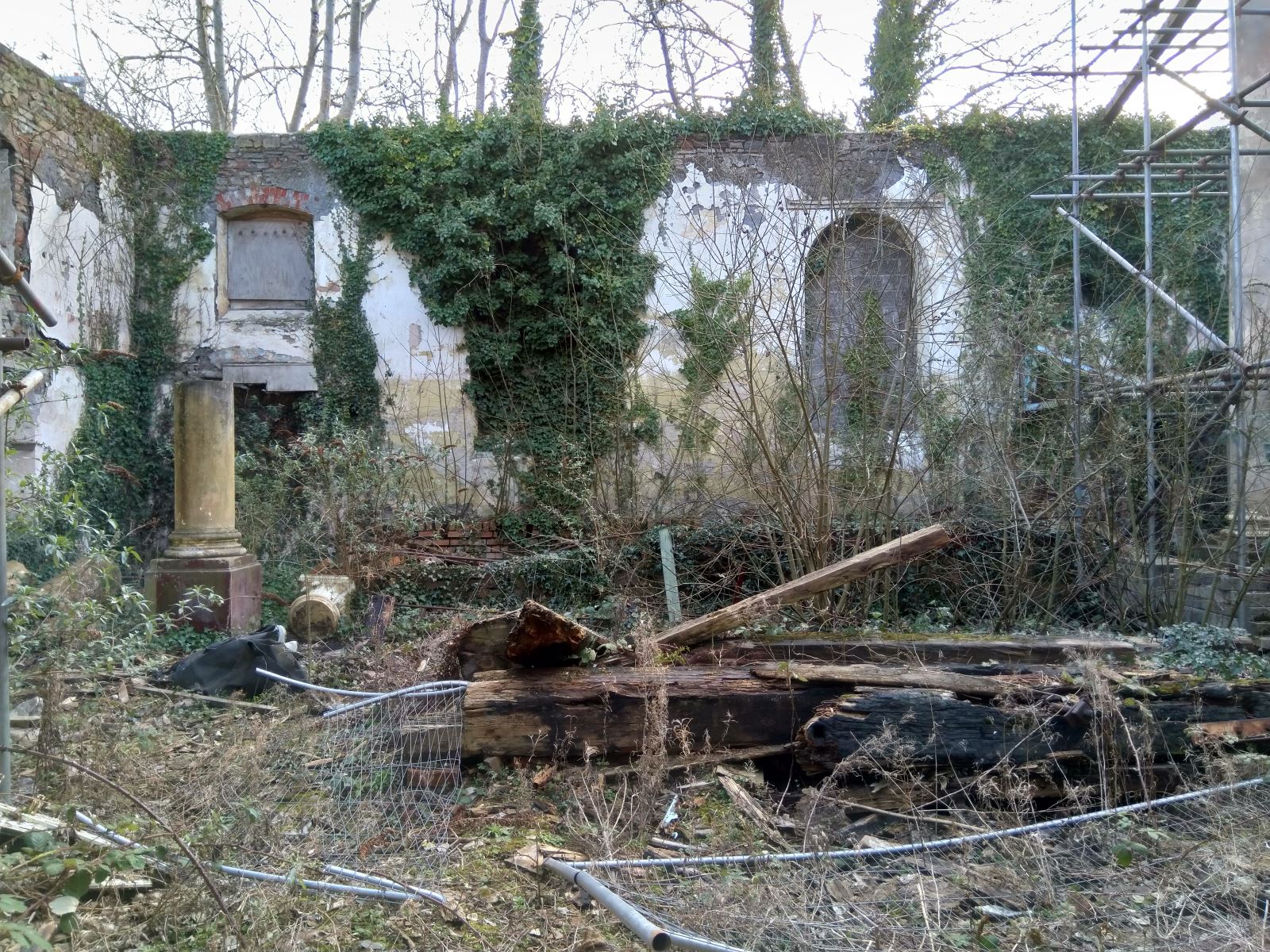
The building, which was commissioned in 1741 by one of the founders of Methodism, George Whitefield, was added to Historic England's Heritage at Risk Register in 1999 after years of disuse and neglect. The final phase of works is designed to see it removed from the Register.
Reverend Anthony Hick, Chair of the Trust, said: “This grant will enable us to fulfil more of the ambitious vision we have developed over the last 10 years for this heritage building.
“Work has already begun on Phase II of our project thanks to the funding from the West of England Combined Authority through South Gloucestershire Council. This additional funding will mean that some items which had been cut from our plans due to rising costs will now be able to be put back in.”
Kim Scudamore, Secretary to the Trust, added: “We are very grateful to Historic England for the faith they have shown in supporting us, although the building remains on their Heritage at Risk Register. This extra funding we have received from Historic England will give us a building that will be a community asset, although we will continue to seek funding for the furniture and fit-out items that we will need to fully meet our vision.”
Rebecca Barrett, South West Regional Director at Historic England, said: “An exciting new future is now in sight for Whitfield Tabernacle after many years of hard work by the Trust and many other partners. We’re delighted to support the final phase of works and look forward to seeing this important building become part of life in Kingswood once again.”
Helen Newman, Project Director at Ferguson Mann Architects, said: “We are delighted that this grant will assist in the delivery of the Trust’s vision for the second phase of work which ensures the building’s re-occupation and success as a much valued community asset.”
History
Whitfield Tabernacle is a modest but important survival in the story of early Methodism, an evangelical movement which emerged inside the Church of England in the 1730s, with John Wesley and George Whitefield as its most famous leaders. It is also Kingswood’s most important historic building.
In his second visit to Bristol in 1739, George Whitefield (1714-1770) started to meet resistance from the Anglican churches where he had preached to packed congregations. He was banned from many churches where his preaching was considered to be ‘too enthusiastic’, but he was encouraged to go and preach to the miners of Kingswood. Over the following weeks he preached at various sites in and around Kingswood, attracting crowds of between 200 and 10,000.
In 1741, Whitefield commissioned and funded local preacher John Cennick to build a modest meeting house for their followers to use. As their congregation grew, the building was expanded in 1753, 1802 and 1830. These improvements included the installation of panelled galleries on three sides to allow the congregation a clear sight of the pulpit. These galleries were destroyed in an arson attack but will be reinstated as a key element of the Phase II work.
The chapel was extended in 1802 and again in 1830 as Methodism gained popularity. In its later history, the building served many purposes, from a schoolroom to a polling station.
In 1913, the congregation installed a bronze plaque recognising the significance of the Tabernacle, reading: "This building was erected by - George Whitfield BA and John Cennick AD 1741 - it is - Whitfield's first tabernacle, the oldest existing memorial to his great share in the 18th century revival."
The Tabernacle became part of the Congregational Church (and subsequently the United Reformed Church) who used the building until 1992 when its condition had deteriorated to the point that the congregation relocated to another nearby chapel and the building was put up for sale. It was finally bought by the Trust in 2019.
George Whitefield’s relationship with slavery leaves a legacy that continues to be discussed and re-evaluated today.
Related
Comments
Comments are disabled for this post.